
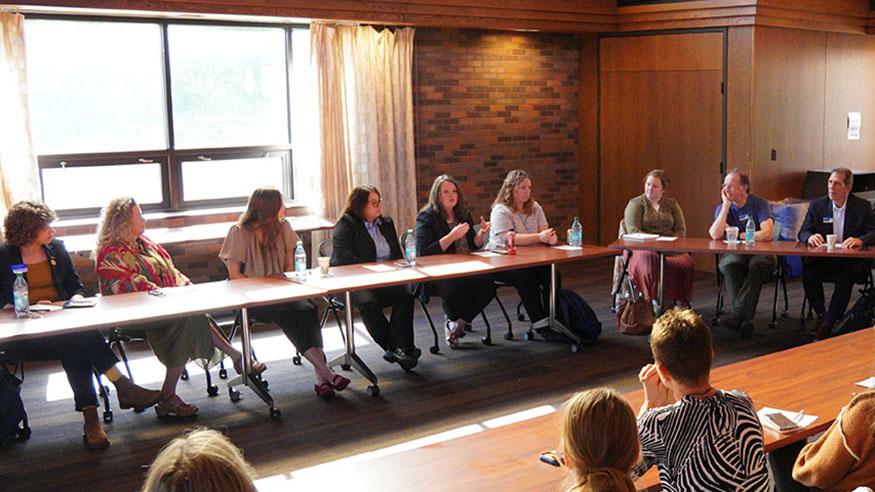
Augustana and Trinity College of Nursing & Health Sciences educators, alumni, clinicians, researchers and public health leaders gathered for the Futurist Thinking Series conversation, "Prepared for the Problems No One Taught You to Solve."
Learning to lead when there are no easy answers
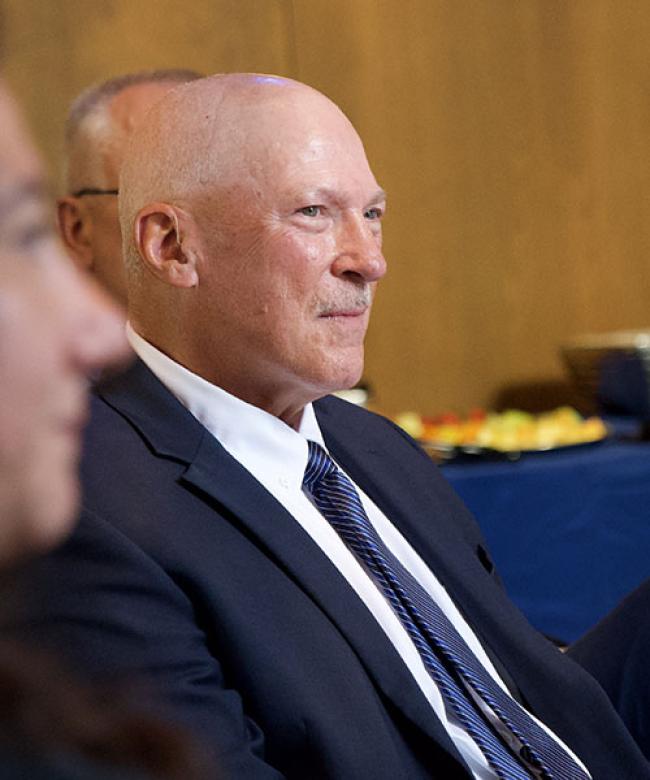
Dr. Alan Bridges '79
Before Dr. Alan Bridges ’79 became medical incident commander for the VA Great Lakes Region during the COVID-19 pandemic, he practiced leadership in places that had little to do with a public health crisis.
At Augustana, he coordinated a residence hall, conducted undergraduate research and was challenged to teach organic chemistry to a blind student. That last assignment required him to rethink how to communicate complex concepts and adapt his teaching to another person's needs.
Decades later, those experiences helped prepare him to navigate responsibilities he could never have anticipated.
Dr. Bridges shared that perspective during Augustana's Oct. 9 Futurist Thinking Series conversation, "Prepared for the Problems No One Taught You to Solve."
Moderated by President Andrea Talentino, the gathering brought together Augustana and Trinity College of Nursing & Health Sciences educators, alumni, clinicians, researchers and public health leaders to explore a central question: What must students develop now to exercise judgment, earn trust and lead through challenges no curriculum can predict?
Beyond what we know today
Dr. Michael Sturek ’79, biomedical researcher and Augustana trustee, challenged participants to consider how students move from learning established scientific knowledge to advancing it.
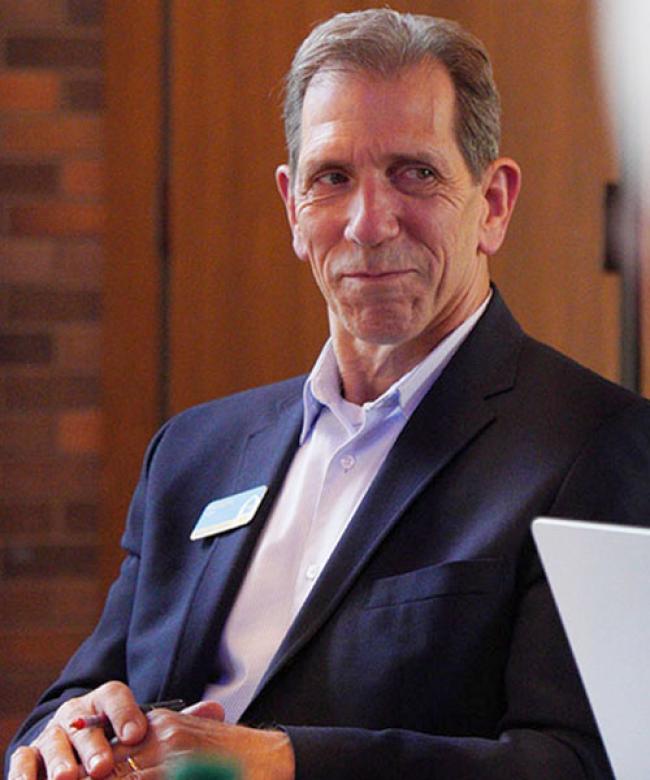
Dr. Michael Sturek '79
He pointed to the discovery of CRISPR gene-editing technology, which grew from research into bacteria, as an example of how curiosity about fundamental questions can lead to breakthroughs with consequences no one initially imagined.
Dr. Bridges approached preparation from another direction: how an excellent clinician becomes a trusted teacher, systems leader and crisis decision-maker.
His experiences illustrated the value of strong scientific foundations, learning to ask why and how, and gaining experience in different systems. Opportunities to stretch beyond familiar responsibilities were especially important.
Together, their perspectives raised a question for educators: How do they intentionally develop curiosity, resilience and judgment rather than simply assume students will acquire them?
Making room for productive struggle
As the conversation opened to the room, participants wrestled with a tension in contemporary education.
Students have unprecedented access to information and increasingly capable AI tools. Yet learning to exercise judgment still requires grappling with uncertainty, asking difficult questions and sometimes getting things wrong.
The phrase "productive struggle" emerged as a way to describe that process.
Participants considered how educators can design challenging experiences while providing the support students need to take intellectual risks. They explored the difference between being uncomfortable and being unsafe, and the importance of allowing students to revisit questions, receive feedback and try again.
The conversation also moved beyond the classroom.
Health professionals must navigate different systems, from clinical practice and public health to insurance, community services and patients' everyday lives. Participants emphasized that understanding disease is not the same as understanding the person experiencing it. Listening, communicating across different perspectives and recognizing the limits of one's knowledge are essential to effective care.
When attendees were asked to complete the sentence, "To trust a future health professional with a problem no one taught them to solve, I would want them to have developed ______," curiosity and humility featured prominently among their responses.
Those words offered a reminder that preparing future health professionals involves more than anticipating technological advances or teaching today's best practices.
It means deliberately creating experiences in which students learn to question, adapt, make decisions and grow into responsibility.
For Augustana and Trinity, the conversation opens a continuing question: How can an education be designed that prepares students not only for the professions they enter, but for the responsibilities they will one day be asked to carry?