
Speech-language pathology, audiology program for high school students
Augustana College will offer an immersive summer experience July 27-29 for high school students interested in speech-language pathology and audiology.
2026-27 Catalog
KAREN AUMULLER, Assistant Professor, Clinical Supervisor, Externship Coordinator
B.A., Smith College; M.A., Northwestern University
MELISSA BAKER, Professional Faculty, Clinical Supervisor
B.A., Indiana University; M.S., Rush University
CLAIRE COOK, Professional Faculty, Clinical Supervisor
B.A., Augustana; M.S., University of Nebraska-Lincoln
ALLISON M. HASKILL, Florence C. and Dr. John E. Wertz Professor in Liberal Arts & Sciences, Department Co-Chair, MS-SLP Program Director
B.S., M.S., Ph.D., University of Nevada–Reno
STACIE M. HATFIELD, Associate Professor
B.S., Illinois State University; M.S., Western Illinois University; Ed.D., Nova Southeastern University
YOONJI KIM, Assistant Professor
B.A., Sungkyunkwan University, M.A., Seoul National University, Temple University; M.Phil., Ph.D., New York University
KEVIN KOCK, Part-time Assistant Professor
B.S., University of Houston; M.P.H., M.A., & Au.D., University of Iowa
CHLOE MCGEHEE, Professional Faculty, Clinical Supervisor
B.S., University of Mississippi; M.S., St. Ambrose University
ANN PERREAU, Professor
B.A., M.A., Ph.D., University of Iowa
MELISSA SCHAEFER, Professional Faculty, Clinical Supervisor, Externship Coordinator
B.S. & M.S., Western Illinois University
ALEXANDRA STONE, Professional Faculty, Center Director
B.A., Augustana; M.S., Eastern Illinois University
CATHERINE WEBB, Associate Professor
B.A., Augustana College; M.S., Nazareth College; Ph.D., University of Illinois at Chicago
LESLEY ZWICKY, Professional Faculty, Clinical Supervisor
B.A., Augustana College, M.A., Truman State University
MAJOR IN COMMUNICATION SCIENCES AND DISORDERS. 42 credits including CSD-110; CSD-205; CSD-210; CSD-215; CSD-220; CSD-305; CSD-310; CSD-315; CSD-405; CSD-410; two from CSD-415; CSD-420; CSD-425; CSD-430; CSD-460; CSD-490; optional: CSD-105. Required supporting courses (16 credits): Any PSYC or SOAN course; Statistics such as PSYC 240 or MATH 130; any course carrying BIOL prefix that is human- or animal-based, such as BIOL-130 or BIOL-140; any CHEM or PHYS course, such as CHEM 131 or 132 or PHYS 121 or 151.
Departments of Education in selected states may require a Human Development Course such as PSYC 216 therefore, this course is recommended for CSD majors. LING 100 is also a recommended course for CSD majors.
Course repeat policy: An exception to the institutional course repeat policy may be available for students who intend to apply for graduate study in Speech-Language Pathology (SLP) at Augustana. With the support of the CSD department, a student may petition the Committee on Advanced Standing and Degrees to repeat and replace a course if the student has not met the minimum grade required for admission to Augustana's MS-SLP program. This option does not apply for students pursuing graduate programs elsewhere.
Grade Point Average Notation: Students must have a cumulative G.P.A. of 3.0 or higher to enroll in CSD-425 and CSD-430. All courses listed in the catalog as required courses for any major and/or minor, including those courses outside of the department or with a different subject coding, are considered part of the major and will count in the grade point average. Some departments may have additional grade requirements for the courses offered within their department. Recommended supporting courses that are optional and not required may also count towards the major, depending on the program. For more information, see your department chair or the degree requirements for the Bachelor of Arts and information on Majors/Minors.
Augustana College will offer an immersive summer experience July 27-29 for high school students interested in speech-language pathology and audiology.
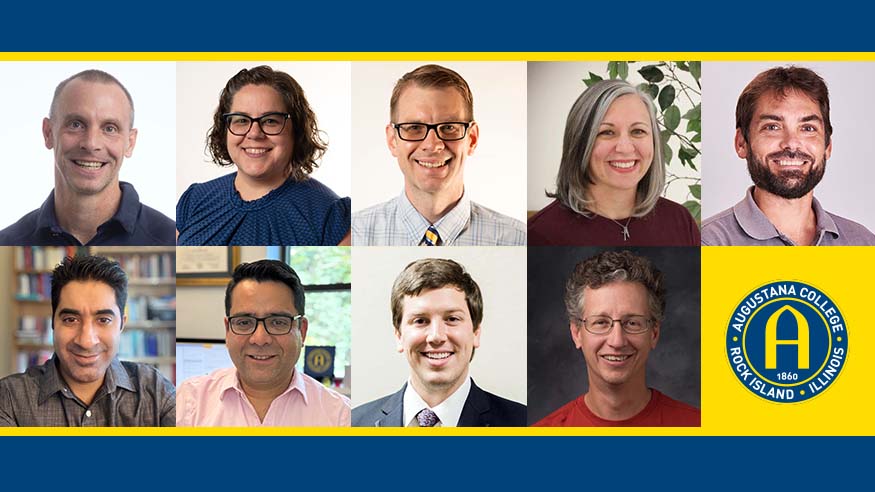
At its annual spring meeting on May 15, the Augustana College Board of Trustees unanimously approved promotion and tenure for nine faculty members.
A new partnership between Augustana College and UnityPoint Health PACE (Program of All-Inclusive Care for the Elderly) Senior Care - Bettendorf is expanding access to hearing care for older adults in the Quad Cities, while giving students the opportunity to provide life-changing services as part of their clinical training.