
Photography guide
Manual mode cheat sheet
- The Exposure Triangle
- ISO (light sensitivity)
- 100-400 – Bright sunlight (outdoor, minimal noise)
- 800-1600 – Indoors or low light (some grain)
- 3200+ – Very dark environments (grainy but usable)
- Shutter Speed (How long light hits the sensor)
- 1/1000+ – Freezes fast motion (sports, action)
- 1/250 - 1/500 – General handheld photography
- 1/60 - 1/125 – Portraits, lower light
- <1/60 – Use a tripod to prevent blur
- Aperture (f/Stop - controls light & background blur)
- f/1.8 - f/2.8 – Blurry background (portraits, artistic)
- f/4 - f/8 – Balanced depth (events, groups, general)
- f/11+ – Everything sharp (landscapes, wide shots)
- ISO (light sensitivity)
- How to Set Manual Mode
- Set ISO first based on lighting conditions.
- Choose an aperture (lower for blurred background, higher for sharp scenes).
- Adjust shutter speed to properly expose the image.
- Check the light meter (in the viewfinder) – aim for zero.
- Fine-tune with exposure compensation (+/-) if needed.
- Quick Event Photography Tips
- Use AF-C (Continuous Auto Focus) for moving subjects.
- Shoot in RAW format if possible for better editing flexibility.
- Use Burst Mode for action shots.
- Avoid extreme ISO settings to prevent noise.
- For sharp images, keep shutter speed higher than 1/100 when handheld.
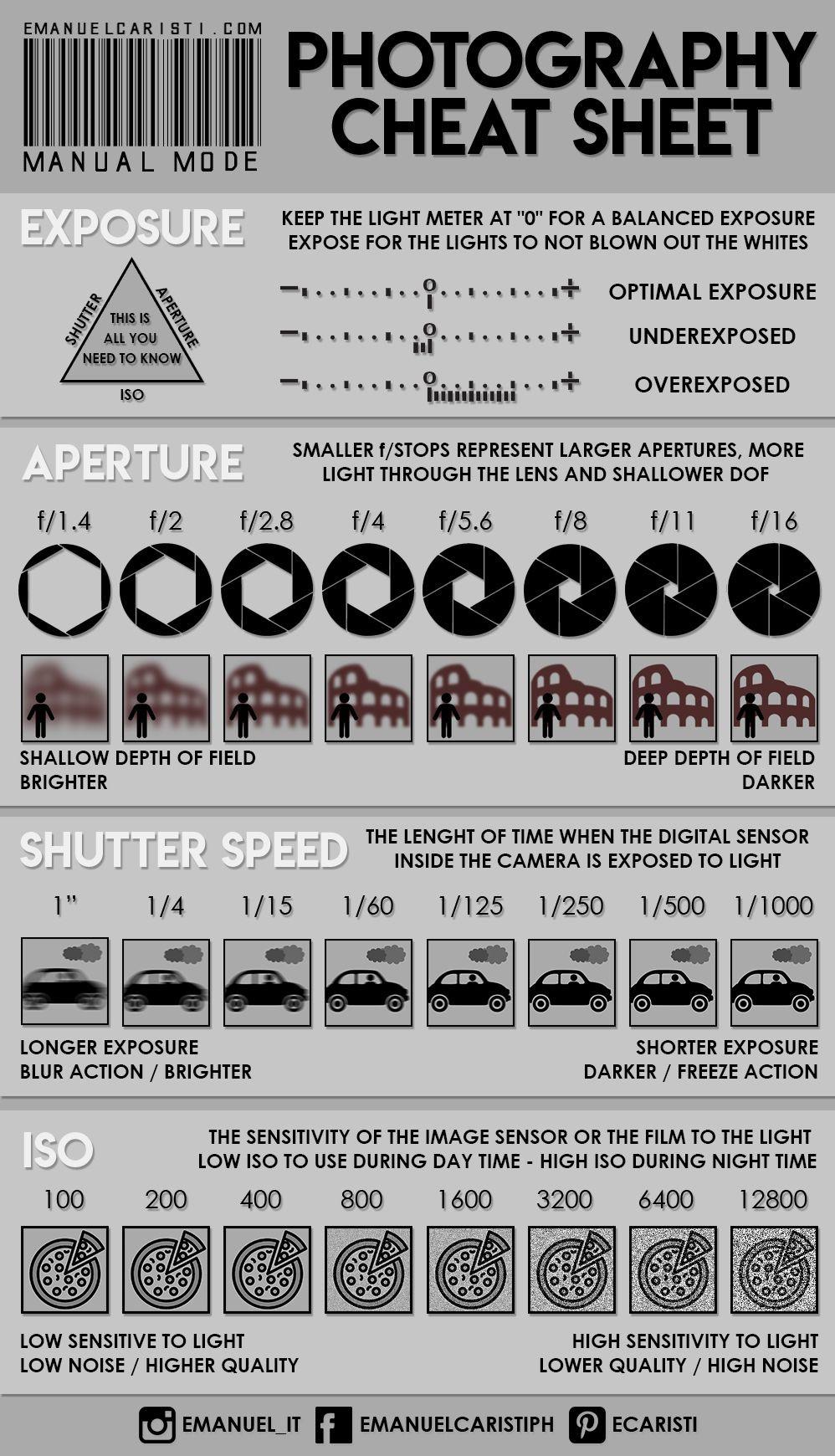
Credit: Emanuel Caristi
Focal length size guide
| Focal length | Type of lens | What is it used for? |
|---|---|---|
| 4mm - 14mm | Fisheye | Abstract, creative |
| 14mm - 35mm | Wide angle | Landscape, architecture |
| 35mm - 85mm | Standard | Street, travel, portrait |
| 85mm - 135mm | Short telephoto | Street photography and portraits |
| 135mm+ | Medium telephoto | Sports, wildlife, action |
| 300mm+ | Super telephoto | Sports from a distance, nature and astronomy |
| 35mm - 200mm | Macro | Close-up shots |