
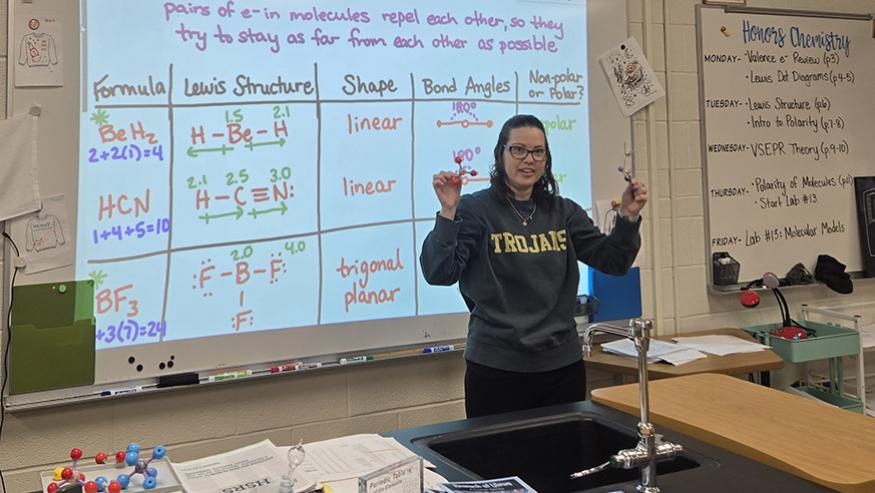
Quoting astrophysicist Neil deGrasse Tyson, Megan Bildner '13 reminds her chemistry students: “Knowing how to think empowers you far beyond those who know only what to think.”
Augustana’s answer to the science teacher shortage
A shortage of science teachers across the nation is making it difficult for high schools to find qualified teachers to fill vacancies.
For the 2024–25 school year, 41 states reported shortages in science classrooms, according to the Learning Policy Institute. Even when schools fill science positions, the data shows, many teachers lack full certification in their subjects, raising concerns about the quality of instruction.
As demand grows, Augustana College continues to stand out for preparing qualified and engaging science educators. Dr. Mike Egan, professor and chair of education, shares that high school principals often reach out to Augustana with inquiries about recent graduates, especially those who majored in education to teach high school chemistry, physics or biology.
“I just got a message from a principal in January pointing out that they are looking to hire a science teacher for August,” Dr. Egan said. “The standard hiring cycle for fall teaching positions is usually April-June. This is one sign of how difficult it can be to find qualified science teachers.”
The four alumni featured here credit Augustana with preparing them to enter their classrooms with confidence, equipped to teach students not just science content, but how to think and learn like scientists.
Megan Bildner ’13 – Iowa City West High School (chemistry)
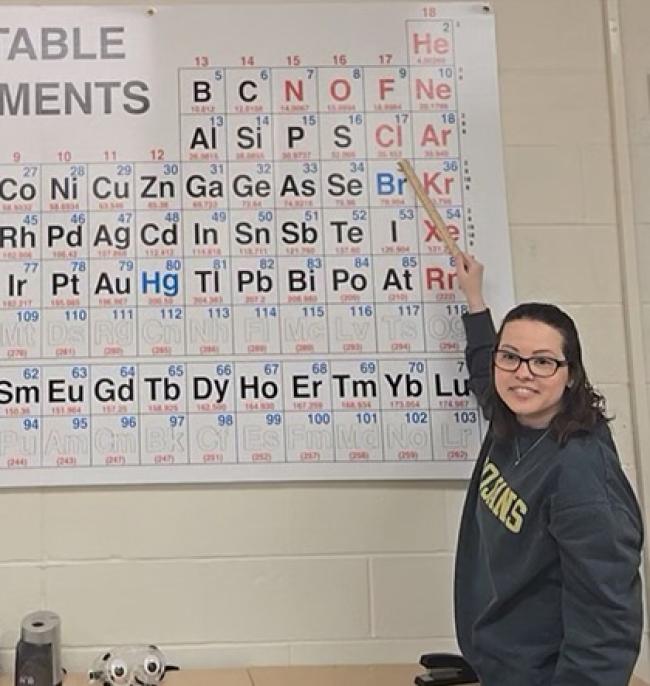
Award-winner Megan Bildner fell in love with the Periodic Table in high school.
For Megan Bildner '13, the path to teaching began with a love of problem-solving. “Math and science were always my favorite subject areas since I was young,” she said.
When she encountered chemistry in high school, she was hooked. “I fell in love with the Periodic Table and how it comes together as a puzzle to explain all of the interactions happening around and within us.”
Initially, she planned to be a pharmacist, but her direction shifted once she arrived at Augustana: “I found myself helping classmates during the first-year chemistry sequence and realized how much I enjoyed sharing my passion for chemistry with others.”
Combined with years of working at summer day camps, teaching became a natural fit.
Bildner, a chemistry teacher at Iowa City West High School, was awarded the I.O.W.A. STEM Teacher Award in 2020. The award is for teachers who are making a significant difference in the lives of students by inspiring a passion for STEM (Science, Technology, Engineering, Math) beyond the classroom and into the future.
Commenting on the shortage of qualified high school science teachers, Bildner emphasized that science classrooms require more than content delivery. “It is especially important that science teachers are comfortable not simply sharing content information with students, but finding ways to challenge students to think critically and become scientists in their own classrooms.”
She noted that research consistently shows students learn best when they are actively engaged, making strong preparation for science teachers essential.
Mentorship played a critical role in forming her teaching philosophy of engaging students. “Dr. Michael Schroeder was the professor who had the greatest impact on my educational journey,” she said.
Despite the demanding path to certification, “Dr. Schroeder was always there to listen and help me find a way to make it all happen!” Her clinical experiences with Jennifer Cook Gregory at Moline High School were equally influential.
Today, what excites her most about teaching is connection. “Honestly, building relationships with the students in my classroom is the most exciting part of my day!” she said.
Beyond chemistry content, Bildner hopes her students learn how to think critically, analyze data and come to their own conclusions based on scientific evidence. Quoting astrophysicist Neil deGrasse Tyson, she reminds her students: “Knowing how to think empowers you far beyond those who know only what to think.”
Alyssa Klahn ’20 Jarzynski – Lincoln-Way Community High School (physics)
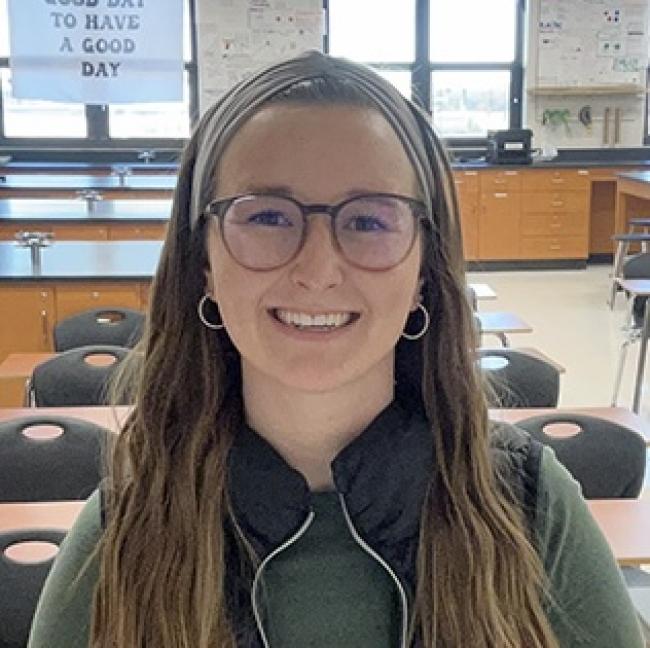
Alyssa Klahn '20 Jarzynski
Before she stepped on campus, Alyssa Klahn ’20 Jarzynski had a career plan. “I enjoyed physics throughout high school, and I also knew I wanted to pursue a career in education,” she said.
Today she teaches physics, honors physics and AP physics calculus at Lincoln-Way Community High School in New Lenox, Ill. She is fully aware of the critical need for high school science teachers.
“I am in a district with a lot of well-qualified science teachers, but many are retiring within the next five years,” Jarzynski said. “Unfortunately, not many education majors pursue science. I was the only secondary education-science major of my class at Augustana, and there was only one in the class after me even though there were dozens of education majors.”
She acknowledges that science can be difficult to teach.
“It’s not just the memorization of facts,” she explained. “In physics, it's understanding how the world works. And if students do not grasp a concept, I have to constantly and sometimes in the moment think of a new way to present concepts that students are able to connect to and understand.”
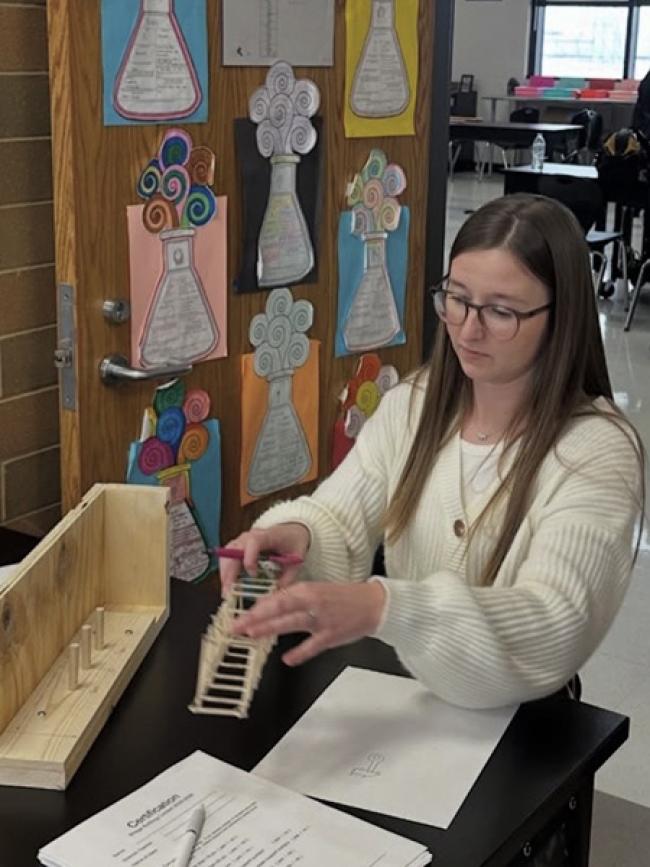
Alyssa Klahn Jarzynski can see how her liberal arts education shapes her classroom every day.
Jarzynski credits Augustana’s rigorous academics for her preparation. “Augustana’s physics department was outstanding and extremely important to who I am as an educator today,” she said. “They challenged me in every course I took.”
While the challenge occasionally tested her confidence, support was close by. “My professors were always there when I reached out. Being challenged allowed me to grow beyond just the content knowledge I needed to teach high school physics.”
Equally formative were her clinical experiences and student teaching. “I remember being extremely nervous and unsure if I should continue pursuing education, but by the end of my student teaching, I didn't want to leave!” Jarzynski said.
She also sees how her liberal arts education shapes her classroom every day. “Teaching science means constantly changing how you present content,” she explained. “A liberal arts education taught me to always look for and from other perspectives.”
Her advice to future science educators is simple: “If you enjoy working with kids and science is your favorite subject, then this is the perfect field for you! Being able to show kids how to experiment, explore and investigate the world around us makes every day so much fun.”
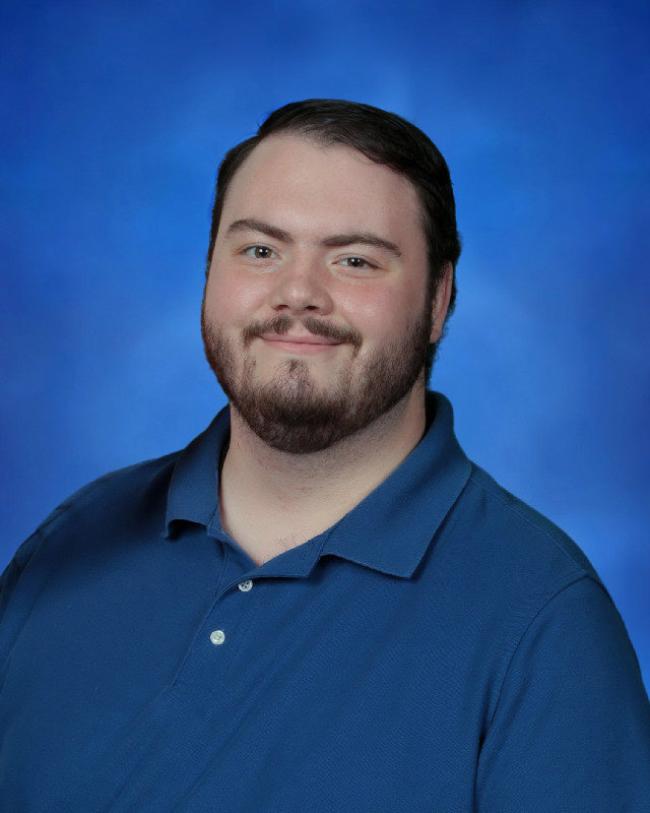
Mike Yuchs '22 – Atascocita High School (biology and physics)
Mike Yuchs '22
Mike Yuchs ’22 teaches biology and physics at Atascocita High School in Humble, Texas, where he sees firsthand why the shortage of science teachers matters.
Yuchs believes science classrooms are too important to be left to non-qualified educators.
“Science classes are some of the best opportunities to teach students critical thinking skills, and to expose them to ideas about how the world around them operates,” he said.
But when there are not enough well-prepared educators to fill those roles, students lose out. “When these courses are taught by people who are ill-prepared or underqualified, all of this potential benefit to students is completely squandered,” he emphasized.
Science majors often choose higher-paying industry or research jobs rather than teach, which is one reason behind the shortage of science educators, according to the Brookings Institution, a public policy research organization.
Yuchs chose teaching over other science-related careers because of the lasting impact educators can have. “The feeling of pride that I have when my students come by years after my class and talk about how I was able to give them the confidence to push themselves and follow their dreams is unrivaled,” he said.
He traces much of his readiness to manage his own classroom back to his time at Augustana. “My classes with Dr. Schroeder stick out, as they prepared me to design lessons and entire units in the most efficient and meaningful manner,” Yuchs said.
He also credits the physics department for shaping his approach. “Every single class that I took with the physics department also helped me grow as an educator. Dr. Frank and the rest of the professors were clearly focused not just on content, but on maintaining high-quality educational practices.”
That preparation now shows up daily in his classes. “The most exciting part of my job is teaching students to solve problems using their own critical thinking skills,” Yuchs said.
By designing labs around student-generated solutions, he finds that “listening to the different ways that students communicate and work towards their own solution is always the most thrilling part of being a science educator.”
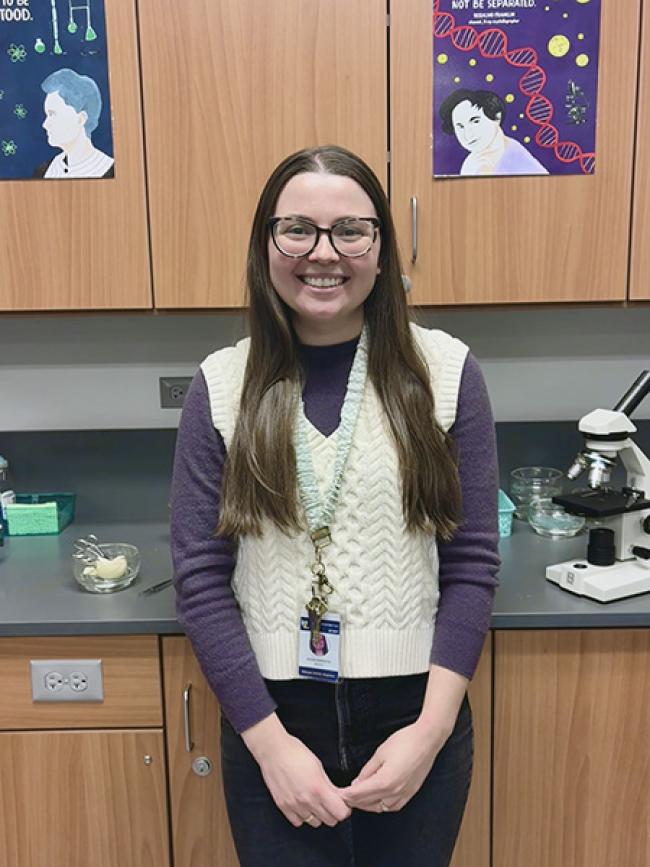
Olivia Ruffatto ’22 – West Leyden High School (biology)
Olivia Ruffatto '22
Olivia Ruffatto ’22, who teaches 9th-11th grade biology at West Leyden High School in Northlake, Ill., found a job that combines her love of science with her passion for the arts.
She intentionally chose a liberal arts college like Augustana because it allowed her to explore both. Today, she not only teaches high school biology but also designs costumes for the school theater program, blending her two biggest interests.
That interdisciplinary mix didn’t just shape Ruffatto’s career path — it also influenced how she thinks about teaching and what students need most from their educators.
“Well-prepared educators are not just those who know how to teach, it’s those who have lots of world experiences to pull from,” she said. “We need teachers with those unique experiences, especially in science, to help engage students in class and increase science literacy.
“Also, I think the access to misinformation, especially information spewed by AI sites, is so abundant that it is critical that students have a fundamental understanding about the natural world and their own bodies.”
Her time at Augustana shaped this approach to her teaching. Mentors like Dr. Michael Schroeder, whom she calls the “ultimate cheerleader,” encouraged creative lesson design, while a cooperating teacher during her student teaching taught her the power of saying, “let’s find out,” letting curiosity guide learning.
“The liberal arts philosophy has always played a huge role in my work,” Ruffatto said. “I remember sitting in Dr. Wegman-Geedey's microbiology class learning about etymology and thinking about how amazing learning roots, suffixes and affixes is for students. I loved being able to take multiple theater classes that later came in handy when I became a costumer for our theater department.”
Ruffatto continually taps into her broad experiences in many disciplines at Augustana. She currently works on an interdisciplinary team that designs lessons that integrate biology, English, global studies, digital literacy and health.
But at the end of the day, what excites Ruffatto most about teaching biology? Hands-on labs, access to real-world technology, and virtually connecting her students with notable scientists, she said.
“Above all else, what excites me the most is working with students who themselves are enthusiastic to learn,” she added. “That means I've done my job right.”