Environmental studies and geography major/minor FAQs

The fields of environmental studies and geography both prioritize understanding the interactions between people and our environment. Both fields are reliant on faculty with expertise in the natural and social sciences and a commitment to engaged and place-based learning. When considering shared goals and values, it made sense to combine them into one major. 

The Department of Environment, Geography, and Geoscience's faculty have provided to questions you may have about Augustana's new major and minor in environmental studies and geography.

Campus community (faculty, staff)

Q: What is the official name of the new department, and what majors are included?

The Department of Environment, Geography, and Geoscience offers two majors:

  • Environmental studies and geography
  • Geology

Q: Why were the two majors combined into one? Advantages for students? Advantages for faculty?

The fields of environmental studies and geography both prioritize understanding the interactions between people and our environment. Both fields are highly reliant on faculty with expertise in the natural and social sciences. Finally, both fields are highly committed to engaged and place-based learning. 

When considering our shared goals and values, it made sense to combine into one major.

Students can expect a more robust and coordinated set of course offerings that prepare them for their future careers in a variety of different fields. Furthermore, with environmental studies and geography being one major, students have the opportunity to double-major with a discipline that complements and expands their interests and preparation for the future. 

Similarly, faculty have the opportunity to teach a wider set of courses, especially electives, that fit their expertise. They also have an opportunity to more easily build partnerships and collaborations that benefit the department, college and community.

Q: Will the faculty stay the same in the newly combined major?

Yes! The faculty members in the environmental studies and geography majors, respectively, are active faculty members in the new major.

Q: What are the objectives and focus areas of the new environmental studies and geography major?

The environmental studies and geography major helps students navigate complex environmental and geographic problems so that they can lead change. Students may choose an area of concentration in any of the following:

  • Earth and Ecological Conservation
  • Environmental Policy, Management, and Advocacy
  • Urban Planning and Justice
  • Sustainable Energy

Q: How does this new major (combining the two) reflect the college’s strategic goals?

Experiential, place-based learning that exemplifies inter-disciplinarity and community collaboration is at the heart of what we do.

Q: Are new courses being developed?

Yes! The new major includes multiple newly designed courses, including all of the required courses. These courses include: Contemporary Environmental Problems (ESGE 100); Introduction to Environmental Science (ESGE 200); Environment, People, and Places (ESGE 201); and Applied Environmental Research (ESGE 300). We’ll still offer our existing electives, but they will be offered under the new subject code. We hope to develop new electives, too. 

Q: How will faculty from different departments collaborate to support the major?

Students will be able to take electives in a variety of different disciplines to support their environmental and geographic interests. Electives that support the major are offered in biology, economics, engineering, geology, geographic information science and technology, political science, and sociology and anthropology. 

We anticipate that many of our students will choose to double major in any number of disciplines. English, history, Scandinavian studies, Spanish, business administration, sociology and anthropology, psychology, biology, geology, and geographic information science and technology (GIST) are all represented in the double majors or minors selected by our current students. We hope that this breadth of majors represented continues to grow.

Q: Are there plans for research opportunities or community partnerships connected to the major?

Absolutely! Our faculty are engaged in a wide range of research and community-based projects! Through the Upper Mississippi Center, our students have access to research assistantships that support community-based research projects with the cities of Davenport, Bettendorf and Rock Island. 

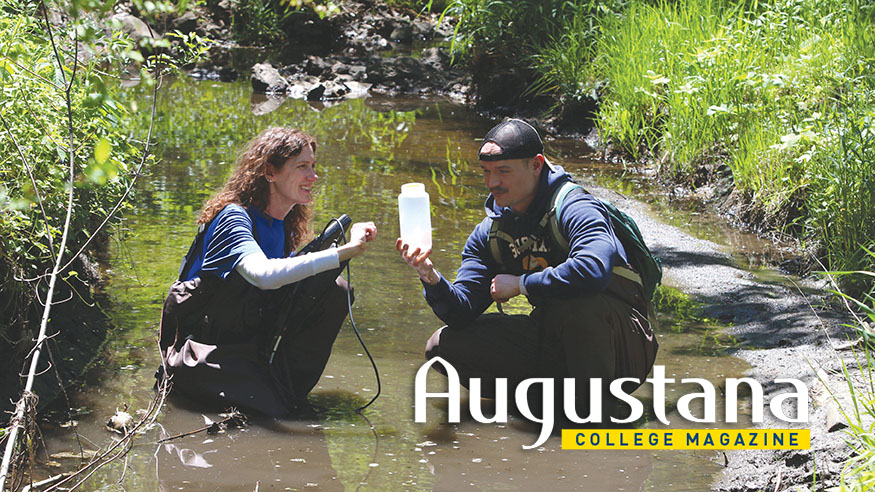
These projects are multidisciplinary, which means that students get experience collecting field data, conducting interviews and surveys, and working with quantitative, qualitative and geographic data. Additional partnerships with organizations such as West End Revitalization provide further opportunities to do hands-on work that matters.

Current students

Q: I’m graduating in spring 2026. How does this affect me?

It doesn’t! By now, you have already received your degree audit and already know that you are set to graduate.  

Q: Do current students (geography majors and environmental studies majors) have to switch into this new major, and what is the process?

No. Students who have already declared a geography or environmental studies major do not have to switch. Your advisor will work with you to make sure you meet the requirements of the major you already declared. While this may involve some course substitutions, this will not impact your ability to graduate on time. A student entering in fall 2025 or later will need to declare the new major. 

Q: How will courses for this major fit with my current degree plan? In what subject will my bachelor’s degree be?

See above. Your degree will be in the major you already declared. During the transition between the old and new major, advisors will work closely with students to see that they select courses that fulfill the requirements of their declared major, even if these courses have different names in the new major.

Q: What department is the new major under?

The Department of Environment, Geography, and Geoscience.

Q: Will the faculty stay the same in the newly combined major?

Yes, the change does mean, though, that these professors will be working more closely and collaboratively than before.

Q: What careers or graduate programs does this new major prepare me for?

The new major prepares students for a broad array of careers in both geography and environmental work. Students with this major can pursue graduate programs and jobs in many environmental and/or geospatial fields that address conservation issues, environmental policy, resource management, urban planning, among others, with experiences throughout the major that are designed to prepare them for careers in non-profit, private or governmental agencies such as the EPA.    

Q: Are there internship, research or fieldwork opportunities in this major?

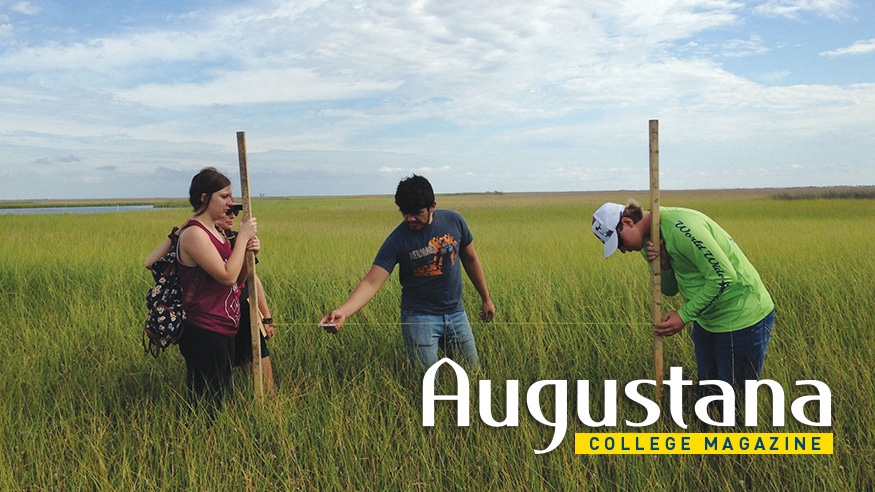
The new major builds on the already strong foundation that both geography and environmental studies have in stressing the value of fieldwork and research. Many of our classes involve significant hands-on field opportunities and opportunities to contribute to real-world research projects in the classroom. 

In addition to class work, students in this major have a strong track record of obtaining summer internships with organizations such as River Action, Nahant Marsh Education Center, MetroLINK, Augie Acres, local conservation agencies and independent research assistantships in collaboration with Augustana professors. Augustana’s Upper Mississippi Studies Center also offers paid summer internships to perform research on environmental issues in local communities.

Q: Can I combine this major with a minor or double major?

Absolutely. Students can combine a major in environmental studies and geography with many different majors and minors that combine to support specific environmental and geographic career goals. 

Examples include sociology and anthropology, geology, biology, psychology, economics, GIST and many others. We also encourage students to follow their passions in areas less directly related to the major. Majors in other areas, across the liberal arts, can make deep and lasting connections.   

Q: How does this major incorporate sustainability and real-world environmental challenges?

Sustainability and environmental challenges are vast and require an interdisciplinary perspective to discuss and problem solve for solutions. This major addresses this need with the development of areas of concentrations (AOCs) that provide students with an opportunity to specialize on a specific skill set that can develop to address sustainability and real-world environmental challenges. 

Within each AOC are courses from within and outside the major that provide experiential learning opportunities to explore sustainability issues from diverse perspectives and discuss solutions in a means to provide students with an interdisciplinary knowledge base.

Q: Will there be student clubs, organizations or networking events tied to this major?

Yes. There are several clubs associated with our department, including the Udden Club that meets once a week and the Augustana Sierra Club. These are both student-run organizations that have dedicated faculty involved that engage students in seminars and local field trips!

Q: Who do I contact for academic advising about this major?

When you declare a major, you will be assigned an advisor who has expertise in your area of interest. To declare a major, contact Dr. Sarah Lashley, department chair.

Prospective students and parents

Q: How is this new major different from what we had before?

The new major is centered around a revised core sequence of courses but has an expanded set of upper level elective courses and areas of concentration that students can select from based on the post-graduate goals.

Q: How will this affect prospective transfer students? Will credits transfer in the same way?

Transfer credits should work the same way they have in the past.  

Q: What makes the new environmental studies and geography major unique compared to other schools’ programs?

The major is truly interdisciplinary and provides students with a strong foundation in the human, ecological and geosciences dimensions of environmental problems. The program is also centered on providing students with multiple hands-on, real-world learning experiences (community-based projects, faculty-mentored research, study-away programs, etc.)

Q: What courses will students take, and what skills will they gain?

Talk to advisors regarding available courses. Students will learn to use a truly interdisciplinary critical thinking framework to understand environmental problems. They will hone their oral and written communication skills by presenting their findings to community partners. They will also hone their interpersonal collaboration and team-working skills while working with a diverse array of community partners.

Q: How does this new major prepare students for careers or graduate school?

The new major prepares students for a broad array of careers in both geography and environmental work. Students with this major can pursue graduate programs and jobs in many environmental and/or geospatial fields that address conservation issues, environmental policy, resource management, urban planning, among others, with experiences throughout the major that are designed to prepare them for careers in non-profit, private or governmental agencies such as the EPA.    

Q: Are there opportunities for fieldwork, study abroad or hands-on learning?

Yes, the new major is centered around offering students multiple opportunities to engage in such learning experiences.

Q: What types of internships or partnerships are available?

Internships are available with local, county, state and federal land management agencies, non-governmental (NGO) conservation organizations, as well as corporate environmental compliance and sustainability departments. Augustana's Upper Mississippi Center for Sustainable Communities (UMC) also offers a 10-week summer research experience for 10-12 students each summer, as well as research-based internships during the academic year. Students participate in a diverse array of community-based research experiences.

Q: Can students pursue minors or double majors alongside this program?

Yes, the new major was specifically designed to make doing so even easier. Students can combine a major in environmental studies and geography with many different majors and minors that combine to support specific environmental and geographic career goals.

Examples include sociology and anthropology, geology, biology, psychology, economics, GIST and many others. We also encourage students to follow their passions in areas less directly related to the major. Majors in other areas, across the liberal arts, can make deep and lasting connections.  

Q: What support services are available for students, including advising and career planning?

Students are assigned an advisor when they declare their major with the goal of matching the student with a faculty member with expertise and experience that aligns with their post-graduate goals and passions. Students will meet with their advisor at least 2-3 times per year and have access to career planning resources at CORE.

Q: How will this major connect to broader global environmental issues?

Both the core foundational courses and many of the electives are centered around case studies of these broader global environmental issues, as well as local and regional ones.

Alumni

Q: Will this affect the value of my bachelor’s degree in geography or environmental studies?

Absolutely not! The merger simply allows the two programs to more efficiently use resources and faculty expertise to meet the demands of current students and to strengthen our program for the future. 

Q: Why were the two majors combined to create this new one? How does it reflect the college’s mission/strategic plan?

The decision to combine geography and environmental studies was initiated by the faculty in order to: 1) decrease content overlap in these closely related disciplines, 2) increase student opportunities in varied course offerings, and 3) maximize faculty talent and specialization to benefit the most students.

Q: What are the advantages of the new major to students, and to faculty?

Students can expect a more robust and coordinated set of course offerings that prepare them for their future careers in a variety of different fields. Furthermore, with environmental studies and geography being one major, students have the opportunity to double-major with a discipline that complements yet expands their interests and preparation for the future. 

Similarly, faculty have the opportunity to teach a wider set of courses, especially electives, that fit their expertise. They also have an opportunity to more easily build partnerships and collaborations that benefit the department, college, and community.

Q: How can alumni support the program (mentoring, internships, guest lectures)?

We always appreciate the continued support of our dedicated alumni. If your schedule allows you to travel, students love in-person guest lectures about specific content or career opportunities. Virtual guest lectures are an increasingly easy and efficient way to connect with students as well. Sharing job or internship postings is another way to help create pipelines and learning opportunities for our students.

Q: Does this new major reflect current trends in environmental science and geography?

Our programs are always changing and adjusting to meet the needs of both students and future employers. The combined major will be no exception. Our alumni connections help us stay up-to-date on the skills that students will need, as well as coursework that would benefit students. Our GIST minor is one example of a new program that helps enhance GIST skills and provides opportunities for learning drone technology for field data acquisition.

Q: What career paths could graduates of this program pursue?

Students with this major can pursue careers in many environmental and/or geospatial fields that address conservation issues, environmental policy, resource management, among others, with experiences throughout the major that are designed to prepare them for careers in non-profit, private, or governmental agencies such as the EPA. 

Current graduates hold the following positions:

  • GIS Analyst, WSP USA
  • Environmental Protection Specialist, State of Colorado
  • Transportation Planner, QC MetroLINK
  • Emergency Management Specialist, City of Aurora
  • Environmental Technician, Environet
  • Project Coordinator, Western Ecosystems Technology
  • Sustainability Manager, Augustana College and Wheaton College
  • Senior Project Engineer (GIS), ESRI
  • Geographer, U.S. Army Corps of Engineers
  • Environmental Manager, U.S. Army Corps of Engineers
  • Soil Conservationist, U.S. Department of Agriculture, Natural Resources Conservation Services
  • Earth Science Teacher, Bronxdale High School
  • Senior Transportation Planner, Parametrix
  • Land Steward, Colorado West Land Trust
  • GIS Analyst, Iowa Department of Natural Resources
  • Environmental Legislative & Regulatory Affairs Analyst @SacSewer
Faculty promotions and tenure recipients

Augustana celebrates faculty promotions and tenure

At its annual spring meeting on May 15, the Augustana College Board of Trustees unanimously approved promotion and tenure for nine faculty members. 

Augie Acres students planting

Earth Week events planned for April 22-28

Augustana student groups will host hands-on activities and events for Earth Week, April 22-28. All are invited to connect with nature and help make an impact on campus.

Orchestra

Competition winners to perform with Augustana Symphony Orchestra

Winners of the Augustana Symphony Orchestra Concerto Competition will perform with the orchestra at 3 p.m. Saturday, March 14, in Augustana’s Centennial Hall. Featured soloists are Emily Churak '27, voice; Ian Empen '26, trumpet; and Dianna Hester '27, cello.

Sylvan Island: Unique Creation & Present Uses

Professor Emeritus of Geography Dr. Norm Moline ’64, will present "Sylvan Island: Unique Creation & Present Uses" as part of River Action's Riverine Walks series.

Sylvan Island: Unique Creation & Present Uses

Professor Emeritus of Geography Dr. Norm Moline ’64, will present "Sylvan Island: Unique Creation & Present Uses" as part of River Action's Riverine Walks series.